Fabric Development (Pre-Production)
Overview
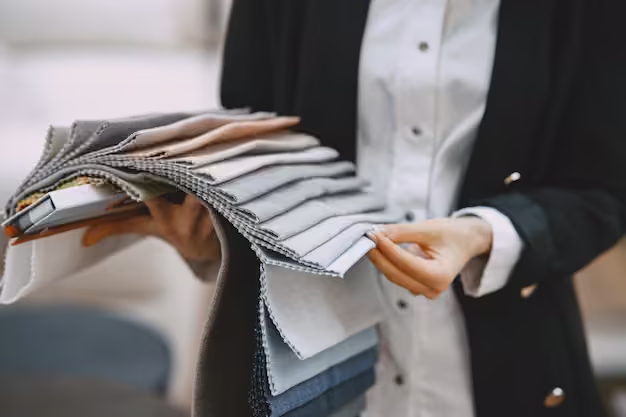
Fabric development is the foundation of every successful garment. At Sea Cross Apparel, we ensure that the fabric used in production meets buyer expectations for quality, durability, comfort, and performance. While this stage is outsourced to carefully selected partners, our technical team closely supervises each step to maintain full control over standards, specifications, and consistency.
Our fabric development services are designed to support denim and apparel brands that require reliable sourcing, predictable quality, and repeatable results for bulk production.
Our Fabric Development Services
We manage the complete pre-production fabric cycle, including:
- Cotton fiber selection and blending
- Yarn spinning and quality control
- Yarn dyeing for denim production
- Weaving of denim fabrics
- Fabric finishing, shrinkage control, and inspection
Each process is aligned with buyer tech packs and approved samples.
Our Process
1. Fiber Selection & Blending
We begin by selecting cotton fibers based on strength, fineness, and intended garment use. Depending on buyer requirements, cotton may be blended with elastane (spandex) or polyester to enhance stretch, recovery, and durability. Fiber selection plays a critical role in fabric hand feel and long-term performance.
2. Yarn Spinning
Selected fibers are converted into yarn using appropriate spinning methods such as ring spinning, open-end spinning, or compact spinning. The spinning method is chosen based on the required yarn uniformity, strength, and surface appearance.
3. Yarn Dyeing
For denim fabrics, warp yarns are dyed using indigo or sulphur dyeing systems. Dyeing parameters are controlled to ensure shade consistency, color fastness, and predictable wash-down effects in later garment processing.
4. Weaving
Dyed warp yarns and undyed or grey weft yarns are woven on modern looms to create denim constructions such as 3/1 twill. Fabric weight, construction, and density are monitored to meet buyer performance and fashion requirements.
5. Fabric Finishing & Inspection
After weaving, fabric undergoes finishing processes including singeing, desizing, and sanforizing to control shrinkage and improve surface smoothness. Each fabric roll is thoroughly inspected for defects, dimensional stability, and quality compliance before being approved for garment manufacturing.
Quality Assurance
Quality control is integrated at every stage of fabric development. Yarn strength, shade consistency, fabric construction, and shrinkage are checked to ensure the fabric performs consistently during cutting, sewing, and washing.
Why Choose Sea Cross Apparel for Fabric Development
- Strong sourcing network with trusted fabric partners
- Technical supervision at every outsourced stage
- Consistent fabric quality across repeat orders
- Buyer-focused approach aligned with international standards
- Reduced production risk through early-stage quality control
Our structured fabric development process ensures that only approved, production-ready fabric enters the garment manufacturing stage.